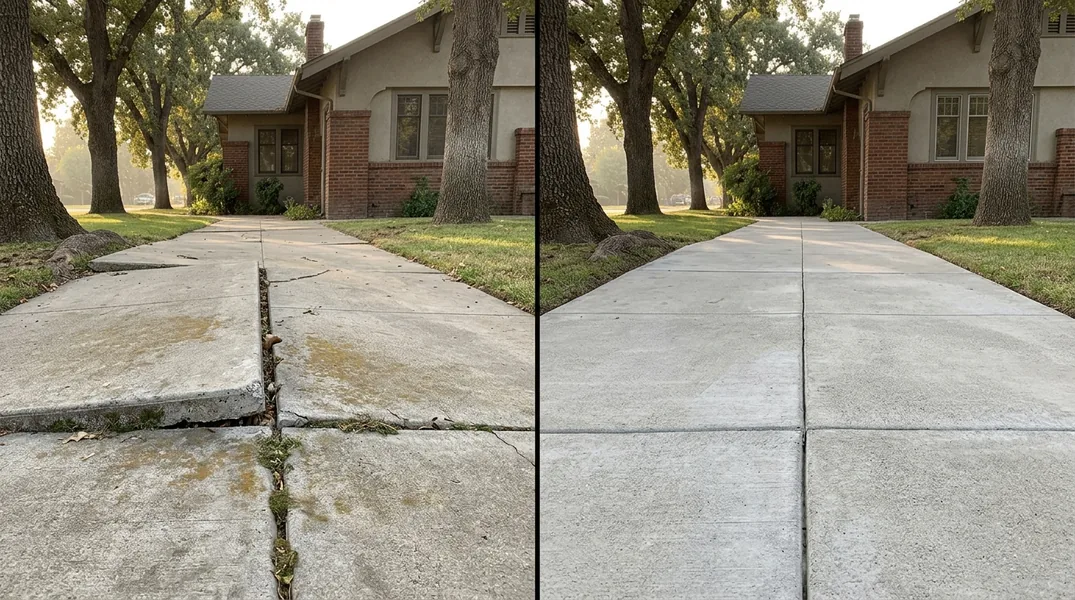
Understanding Visalia's Soil Composition and Its Impact on Concrete
Visalia sits in the heart of the San Joaquin Valley, a region with some of California's most complex soil conditions. Unlike areas with stable, uniform soil, Visalia homeowners deal with a layered geology that includes sandy loam topsoil, clay pockets, and dense clay hardpan deeper down. This combination creates a perfect storm for concrete problems, especially in Concrete Driveways and foundation slabs.
When concrete contractors pour a slab in Visalia, they're not just dealing with the surface layer. The clay hardpan, which can sit anywhere from 8 to 20 feet below grade depending on your neighborhood, acts like an impermeable barrier. This layer traps water and prevents proper drainage, which means moisture accumulates beneath your driveway. Over time, this trapped moisture causes the soil to expand and contract with seasonal changes, leading to the cracking and heaving that many local homeowners experience.
Visalia Soil Concrete Cracking: Why It Happens Here
Cracking in concrete is never random, and in Visalia, the reasons are deeply rooted in local geology. The sandy loam that comprises much of the top 3 to 5 feet of soil is naturally unstable. It compacts unevenly, shifts with moisture changes, and doesn't provide the uniform support that concrete needs. When a contractor pours a slab without addressing this instability, the concrete settles unevenly across the pad, creating stress points that inevitably crack.
The real culprit, however, is often the clay pockets scattered throughout Visalia's subsurface. These dense clay zones hold water like a sponge and expand significantly when wet. During the Valley's rare heavy rains or when irrigation water seeps down, these clay pockets swell. The pressure from this expansion pushes upward on your concrete slab, causing it to heave or crack. In summer, when the soil dries out, those same clay pockets shrink, creating voids beneath the slab that lead to settlement and additional cracking. This cycle repeats year after year, gradually degrading even well-installed concrete.
San Joaquin Valley Subsidence Concrete: A Valley-Wide Problem
Subsidence is a term that describes the gradual sinking of land due to groundwater extraction and soil compaction. The San Joaquin Valley, including Visalia, has experienced some of the most dramatic subsidence in the United States over the past century. Agricultural irrigation has drawn down aquifers, and as water is removed from the soil, the clay layers compact and consolidate. This slow, steady sinking affects everything built on the surface, including your Concrete Driveways and Concrete Patios.
What makes subsidence particularly problematic for concrete is that it doesn't happen uniformly. One corner of your driveway might sink faster than another, or a section near the street might settle differently than the area near your garage. This differential subsidence creates stress on the concrete, causing it to crack, buckle, or develop a noticeable slope. Even if your driveway was perfectly installed five or ten years ago, ongoing subsidence in the Valley can slowly degrade it over time. Homeowners often notice water pooling in new spots or cracks that seem to reappear after repair, and subsidence is frequently the hidden cause.
Clay Hardpan Slab Problems: What's Happening Beneath Your Driveway
The clay hardpan layer that lies beneath much of Visalia is a dense, nearly impermeable stratum that presents unique challenges for concrete installation and longevity. This layer, typically several feet thick, was formed over millennia by the compaction of clay and silt deposits. While it provides some structural support, it also prevents water from draining naturally downward. Instead, water moving through the sandy loam above gets trapped at the hardpan interface, creating a saturated zone that weakens the soil and encourages expansion and contraction.
Professional concrete contractors in Visalia know that proper preparation is essential when dealing with clay hardpan. This means breaking up or scarifying the hardpan surface, installing adequate drainage, and using proper base materials to create a stable foundation. When these steps are skipped or done poorly, the concrete slab sits directly on unstable, moisture-laden soil. The result is premature cracking, uneven settling, and a driveway that may need Concrete Repair & Resurfacing within just a few years instead of lasting 20 or 30 years.
Concrete Repair Near Me: When to Call a Professional in Visalia
If you're seeing cracks in your driveway or noticing that water pools in certain areas, it's time to assess whether professional repair is needed. Small surface cracks that are less than an eighth of an inch wide and don't show signs of spreading can sometimes be sealed with concrete crack filler as a temporary measure. However, in Visalia, where soil movement is ongoing, these surface fixes rarely provide long-term solutions. Wider cracks, cracks that form new branches, or areas where the concrete is heaving or settling unevenly are all signs that the underlying soil is causing problems.
The best approach is to have a professional evaluate your concrete. Visalia Concrete can inspect your driveway, identify whether soil movement or subsidence is the cause, and recommend the most effective repair strategy. For some situations, Concrete Repair & Resurfacing can extend the life of your driveway significantly. For others, if the underlying soil is severely compromised, complete replacement with proper soil preparation may be the most cost-effective long-term solution. Calling (559) 471-3929 for a free estimate lets you understand your options without obligation.
Protecting Your Concrete: Best Practices for Visalia Homeowners
While you can't change the geology beneath your property, you can take steps to minimize the impact of Visalia's challenging soil conditions on your concrete. The most important step is managing water. Keep gutters and downspouts clean and direct water away from your driveway and foundation. Avoid overwatering landscaping near your concrete, and be mindful of irrigation systems that might be saturating the soil beneath or adjacent to your slab. In Visalia's dry climate, controlling moisture is one of the most effective ways to reduce soil movement and concrete damage.
When you're planning new concrete work, whether it's a driveway, patio, or other project, invest in proper site preparation. A contractor who understands Visalia's soil conditions will break up clay hardpan, install perimeter and under-slab drainage if needed, use appropriate base materials, and ensure proper grading so water sheds away from the concrete. This upfront investment in preparation dramatically improves the lifespan of your concrete. Additionally, applying a quality sealer to your concrete every two to three years protects against moisture penetration and helps minimize the effects of soil movement. For homeowners considering new Stamped & Decorative Concrete or repairs, choosing a local contractor who understands these regional challenges is essential to getting a durable result.
Looking for a professional concrete contractor in Visalia? Visalia Concrete responds fast for all your concrete needs.
Get a Free QuoteOur services: Concrete Driveways · Concrete Patios · Stamped & Decorative Concrete